
Categories
Selling Your Home, FSBO, Selling At Essex House, Selling At Kennedy House, Selling At Sutton House, Selling At Woodrow Willson Owner HousePublished August 18, 2026
Why the First 30 Days on the Market Matter

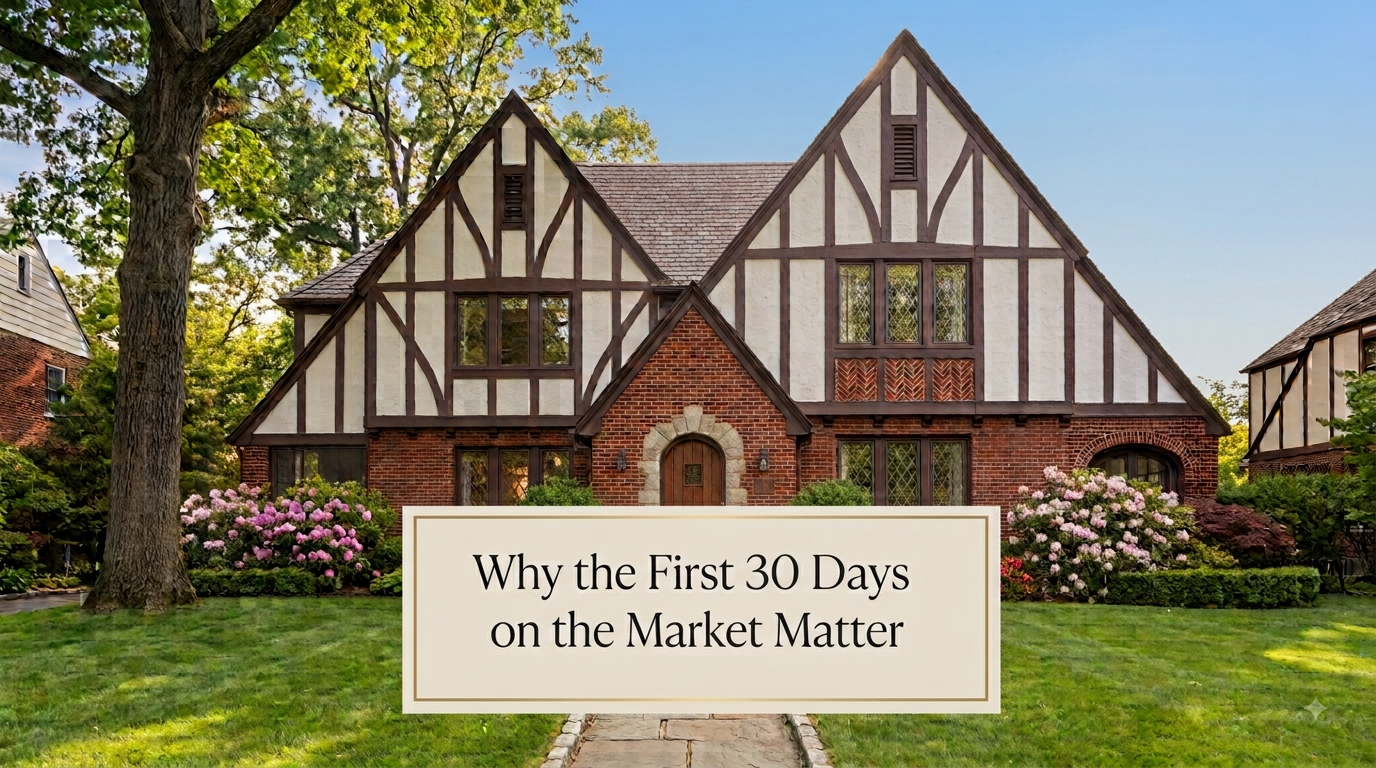
Why the First 30 Days on the Market Matter When Selling Your Home
When you list your home for sale, the first 30 days on the market can be some of the most important days of the entire selling process.
This is when your property is fresh, buyer interest is typically at its highest, and active buyers and their agents are seeing your home for the first time.
That's why I often tell sellers:
You don't want to test the market with your home. You want to enter the market with a strategy.
The decisions you make before and during those first few weeks—particularly regarding pricing, presentation, and marketing—can have a major impact on your final selling price and how long your property takes to sell.
Here's why.
1. You Only Get One Chance to Be a New Listing
The moment your property goes live, buyers who have been actively searching may receive alerts about your home.
Real estate agents notice the new inventory.
Your professional photography, online marketing, broker outreach, social media, and other advertising begin working together.
Your property has something valuable:
The “new listing” advantage.
Buyers who may have already seen everything else available now have something new to consider.
That's why your property should be fully prepared before it goes on the market—not several weeks afterward.
2. Serious Buyers Are Already Watching the Market
One of the biggest misconceptions sellers have is that buyers will gradually discover their property over several months.
Many serious buyers don't shop that way.
They've already been searching.
They know the neighborhoods they want.
They've seen the available inventory.
They may have lost another property in a bidding situation.
They may already have their mortgage pre-approval and attorney ready.
When the right property appears, they're prepared to act.
You want your home to make a strong impression on those buyers immediately.
3. Your Initial Asking Price Matters
One of the most common pricing strategies I hear from sellers is:
“Let's start high. We can always reduce the price later.”
You certainly can.
But the question is:
What happens to your strongest potential buyers while you're testing that higher price?
If comparable properties suggest your home is worth approximately $800,000 and you list at $875,000, buyers may not simply offer $800,000.
Some may decide not to see the property at all.
By the time you eventually reduce the price, those buyers may have already purchased something else.
That's why pricing should be strategic from the beginning.
The goal isn't to choose the highest asking price. The goal is to achieve the highest possible sale price.
Those aren't always the same thing.
4. Overpricing Can Reduce Your Buyer Pool
Buyers usually search within specific price ranges.
Imagine your home's realistic competitive range is approximately $750,000.
A buyer may set an online search with a maximum price of $775,000.
If you decide to “test” the market at $825,000, that buyer may never see your listing.
You're not simply asking more money.
You may actually be removing your property from the searches of buyers who could be the best candidates to purchase it.
This is another reason the initial asking price matters.
5. Early Competition Gives Sellers Leverage
The ideal situation for a seller isn't having one buyer who likes the property.
It's having several qualified buyers interested at the same time.
Why?
Because competition creates leverage.
When multiple buyers are interested, the seller may be in a stronger position to negotiate:
- Purchase price
- Down payment
- Financing terms
- Contingencies
- Closing date
- Other important terms
Instead of negotiating downward with one buyer, you may have buyers competing to make their offers more attractive.
That's one of the reasons creating strong activity early in the listing is so important.
6. Days on Market Can Affect Buyer Perception
After a property has been available for an extended period, buyers may begin asking questions.
“Why hasn't it sold?”
“Is something wrong with it?”
“Was it overpriced?”
“How motivated is the seller now?”
The home itself may not have changed at all.
But the buyer's perception of the property may have changed.
A listing that initially appeared desirable can eventually begin to look like an opportunity for aggressive negotiation.
That's what sellers want to avoid.
7. Repeated Price Reductions Can Weaken Your Position
A seller may begin at $899,000.
Then reduce to $875,000.
Then $849,000.
Then $825,000.
Buyers can see that history.
Instead of thinking:
“We need to act quickly before someone else buys it.”
They may begin thinking:
“Maybe they'll reduce it again.”
That's a very different negotiating environment.
Sometimes a price adjustment is absolutely necessary and can be an effective strategy.
But ideally, you want to position the property correctly enough from the beginning that you're not chasing the market downward.
8. The First 30 Days Give Us Valuable Information
The first month isn't only important because of buyer activity.
It's also when the market starts giving us valuable feedback.
I closely monitor:
- Number of showings
- Open-house attendance
- Online activity
- Buyer feedback
- Agent feedback
- Second-showing requests
- Offers
- New competing listings
- Comparable properties going into contract
Different patterns can tell us different things.
Lots of showings but no offers?
Buyers may like the property but believe the price doesn't match the value.
Very few showings?
The price, presentation, marketing, or positioning may be limiting interest.
Multiple second showings?
That's usually a positive indication that serious buyers are considering the property.
Multiple offers?
Now we have the opportunity to evaluate not only price but also buyer qualifications and terms.
The key is paying attention and responding strategically rather than allowing the listing to sit unchanged for months.
9. Presentation Needs to Be Right From Day One
Don't list first and plan to improve the property later.
Before your home goes live, consider whether it needs:
- Decluttering
- Deep cleaning
- Fresh paint
- Minor repairs
- Better lighting
- Furniture rearrangement
- Landscaping or exterior cleanup
- Professional photography
- Staging
The photographs buyers see when the listing first appears may determine whether they schedule a showing.
Your home's first impression now happens online before it happens at the front door.
10. Marketing Should Launch at Full Strength
A strong listing shouldn't slowly build its marketing over several weeks.
I prefer to have the strategy prepared before launch.
Depending on the property, that may include:
- Professional photography
- MLS exposure
- Major real estate websites
- Social media marketing
- Email campaigns
- Broker outreach
- Direct buyer outreach
- Building and neighborhood marketing
- Property-specific marketing materials
- Open houses when appropriate
- Follow-up with buyers and agents
The objective is simple:
Create as much qualified exposure as possible while your property is fresh to the market.
What If Your Home Doesn't Sell in the First 30 Days?
It doesn't automatically mean something is wrong.
Every property and market is different.
Some luxury homes, unique properties, co-ops, or homes with a smaller buyer pool naturally require more time.
But after the first several weeks, we should have enough information to ask:
What is the market telling us?
We review the activity, feedback, competing inventory, new sales, and buyer response.
Then we determine whether we should:
- Maintain the current strategy
- Improve presentation
- Adjust marketing
- Reposition the price
- Make another strategic change
What I don't recommend is simply waiting month after month and hoping something changes.
The First 30 Days Are About Creating Momentum
Selling your home successfully isn't about putting it online and waiting for the right buyer to eventually appear.
It's about creating momentum.
Prepare correctly.
Price strategically.
Market aggressively.
Generate interest.
Create competition.
Negotiate from strength.
That's the strategy.
Frequently Asked Questions
Is 30 days considered a long time for a home to be on the market?
It depends on the property type, price range, location, and current market conditions. The important thing is to evaluate the amount and quality of buyer activity during those first weeks.
Should I reduce my price after 30 days?
Not automatically. First evaluate showings, feedback, offers, competing listings, and recent market activity. Any price adjustment should have a strategic reason behind it.
Should I list high and negotiate?
Sometimes a property can support an ambitious asking price, but intentionally overpricing simply to leave negotiating room can discourage qualified buyers from viewing the property.
What if I receive an offer during the first week?
Don't assume you listed too low. An early offer can mean your pricing and marketing reached the right buyer. The offer should be evaluated against market value, buyer qualifications, terms, and the level of other interest.
Can a home that has been sitting on the market still sell?
Absolutely. But if activity has slowed, it may require a fresh look at the price, presentation, marketing, or overall positioning.
Thinking About Selling Your Queens Home?
The work that happens before your property hits the market can be just as important as what happens afterward.
With 19+ years of real estate experience and 385+ successful sales, I help homeowners throughout Forest Hills, Rego Park, Kew Gardens, and surrounding Queens neighborhoods prepare, price, market, and negotiate their properties with one goal:
Achieving the strongest possible result—not simply putting a home on the market.
Olga Mayayeva
Associate Real Estate Broker | eXp Realty
Forest Hills & Queens Real Estate Specialist
📞 718-781-3074
🌐 RealtorOlga.com
Thinking about selling? Contact me before you list. Let's make sure your property is positioned correctly from Day One.

Olga Mayayeva
Associate Real Estate Broker | Olga Mayayeva, Realtor | EXP Realty
or another way